Heather Donnelly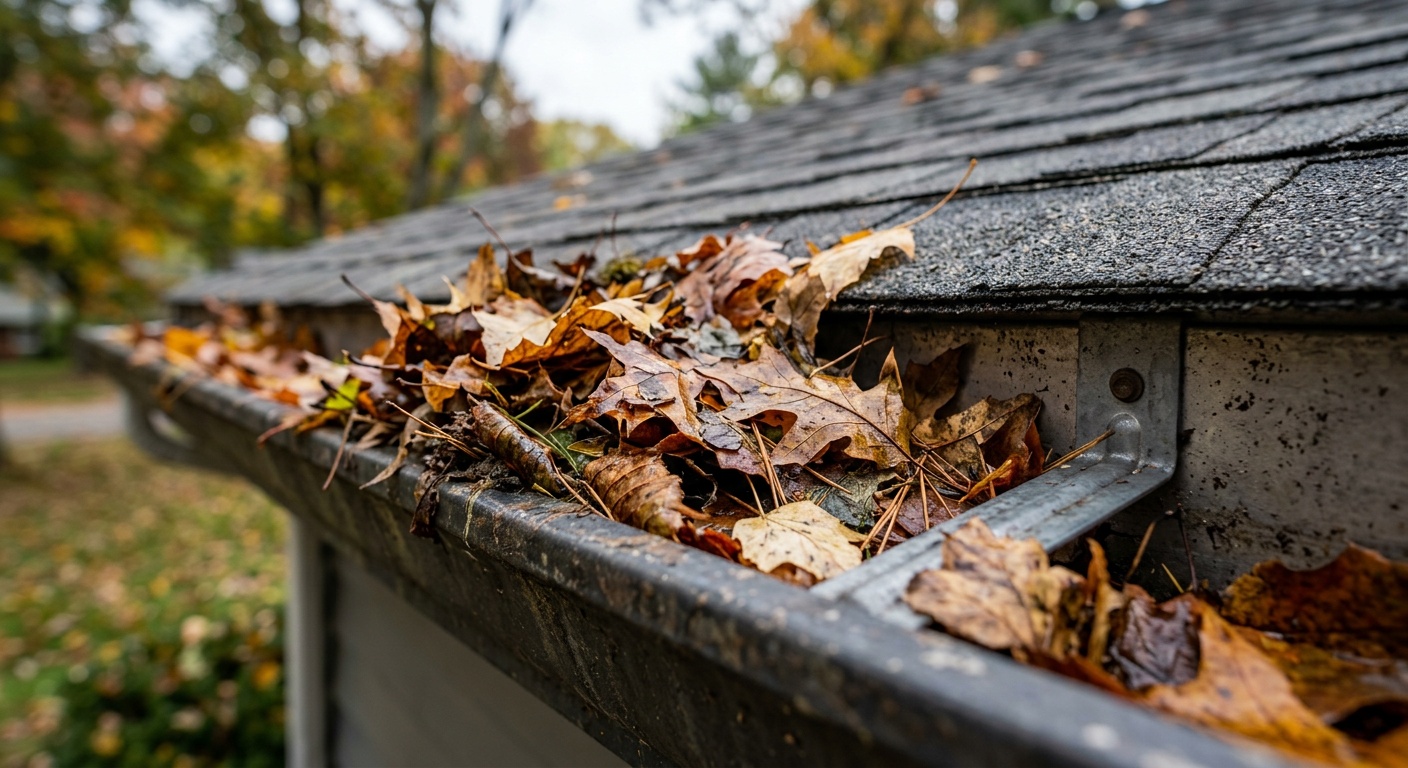
Gutter Cleaning and Maintenance Tips for Every Season
Reading time: 12 minutes
Here’s a scenario that plays out in thousands of homes every year: A homeowner notices water pooling around their foundation after a heavy rainstorm. They call a contractor, brace for a diagnosis — and discover the culprit is clogged gutters that redirected water straight into the soil surrounding their home. The repair bill? Anywhere from $2,000 to $10,000 for foundation damage that was entirely preventable.
The hard truth about gutters is that they’re one of the most overlooked components of a home — right up until they fail. But here’s the good news: maintaining your gutters is one of the most cost-effective home maintenance habits you can build. With the right seasonal strategy, you can protect your home, extend the life of your roofing system, and save thousands in avoided repairs.
Whether you’re a first-time homeowner or someone who has been meaning to “get around to it,” this guide breaks down everything you need to know — season by season, challenge by challenge.
Table of Contents
- Why Gutters Matter More Than You Think
- Spring Cleaning: Damage Assessment and Fresh Start
- Summer Maintenance: Prevention and Proofing
- Fall: The Most Critical Gutter Season
- Winter: Protecting Gutters from Ice and Snow
- Essential Tools and Products for 2026
- Seasonal Maintenance Comparison Table
- DIY vs. Professional Cleaning: Making the Right Call
- 3 Common Gutter Challenges and How to Solve Them
- Gutter Damage Risk by Season
- Frequently Asked Questions
- Your Gutter Maintenance Roadmap: Next Steps
Why Gutters Matter More Than You Think
Most homeowners think of gutters as a simple channel for rainwater. In reality, your gutter system is a critical line of defense protecting your roof, siding, foundation, landscaping, and basement from water intrusion. According to the National Association of Home Builders (NAHB), water damage remains one of the top three most costly home repair categories in 2026, with the average water-related claim now exceeding $13,500.
A properly functioning gutter system redirects rainwater and snowmelt away from your home’s structure. When gutters clog, sag, or leak, that water has to go somewhere — and it usually finds its way into places you really don’t want it: behind your fascia boards, into your soffit, down your exterior walls, and into your soil-and-foundation interface.
Key problems caused by neglected gutters include:
- Foundation cracking and settling from oversaturated soil
- Basement flooding and moisture intrusion
- Rotting fascia boards and roof deck damage
- Mold and mildew growth in attic spaces
- Landscape erosion and damage to flower beds
- Ice dam formation in winter climates
The good news? Routine gutter maintenance costs between $100 and $300 per year for a typical home — a fraction of the thousands you’d spend on structural repairs. Think of it as the cheapest insurance policy your home has.
Spring Cleaning: Damage Assessment and Fresh Start
Spring is when your gutters tell the story of what winter did to them. After months of snow, ice, and freeze-thaw cycles, even well-maintained gutters can show signs of wear. This is your first — and arguably most important — maintenance window of the year.
What to Look for During Spring Inspection
Before you reach for the hose or the ladder, do a thorough visual inspection from the ground first. Walk the full perimeter of your home and look for:
- Sagging sections — caused by the weight of ice and debris over winter
- Separation from the fascia — indicates pulled or damaged hangers
- Visible cracks or holes — even small ones will worsen through the year
- Rust stains or orange streaking — common in older steel gutters
- Paint peeling on siding below the gutter line — a telltale sign of overflow
- Downspout disconnection — can happen from frost heave or high winds
Once you’ve done your visual sweep, it’s time to get up close. Clear out all winter debris — decomposed leaves, twigs, seed pods, and roof granules (those tiny black specks that indicate shingle wear). Flush the entire system with a garden hose, starting at the far end and working toward the downspout.
Spring Repair Checklist
After clearing debris and running water through the system, address any issues you discovered:
- Reseal any joints or end caps showing signs of separation using gutter sealant
- Replace or tighten gutter spikes and hangers where gutters are pulling away
- Patch small holes with gutter repair tape or aluminum flashing compound
- Adjust pitch if water is pooling — gutters should slope roughly 1/4 inch per 10 feet toward the downspout
- Check that downspout extensions direct water at least 4–6 feet from the foundation
Pro Tip: Spring is also the perfect time to evaluate whether gutter guards are worth investing in for your property. If you spent 3+ hours clearing debris last fall, they almost certainly are.
Summer Maintenance: Prevention and Proofing
Summer often feels like the “off season” for gutter maintenance — and for most regions, that’s partially true. However, summer brings its own set of threats that deserve attention, especially in 2026 where climate data continues to show more intense storm events across North America.
According to NOAA’s 2025 annual climate report, the U.S. experienced a record 28 separate billion-dollar weather events — many of them intense rainfall episodes that stress residential drainage systems far beyond normal capacity. In 2026, similar patterns are being tracked, making summer gutter readiness more important than ever.
Summer-Specific Maintenance Tasks
1. Check for blockages after major storms. Summer thunderstorms can deposit significant debris — broken branches, leaf clusters, and seed pods — in a single event. A quick check after any significant storm takes 10 minutes and can prevent overflow damage.
2. Inspect for pest activity. Summer is prime nesting season for birds, wasps, and bees. Gutters offer sheltered, elevated spots that are attractive to pests. If you notice nesting materials or increased insect activity near your roofline, inspect and clear gutters promptly. Wasp nests in gutters can block water flow entirely in a surprisingly short time.
3. Trim overhanging branches. Branches that hang over your roofline are debris delivery systems. Trimming them back by 6–10 feet reduces your debris load dramatically throughout fall. Summer — when foliage is full and you can see clearly — is the ideal time to assess and trim.
4. Test downspout flow rates. Run a hose at full pressure into each downspout. Healthy downspouts should drain quickly and freely. If water backs up or drains slowly, use a plumber’s snake or pressure washer attachment to clear the blockage.
Case Study: A homeowner in Atlanta, Georgia, skipped summer gutter maintenance in 2025 and discovered — after a heavy late-August storm — that a wasp nest had completely blocked their rear downspout. The resulting overflow damaged their deck ledger board and required $1,800 in repairs. A 15-minute summer inspection would have caught the nest early.
Fall: The Most Critical Gutter Season
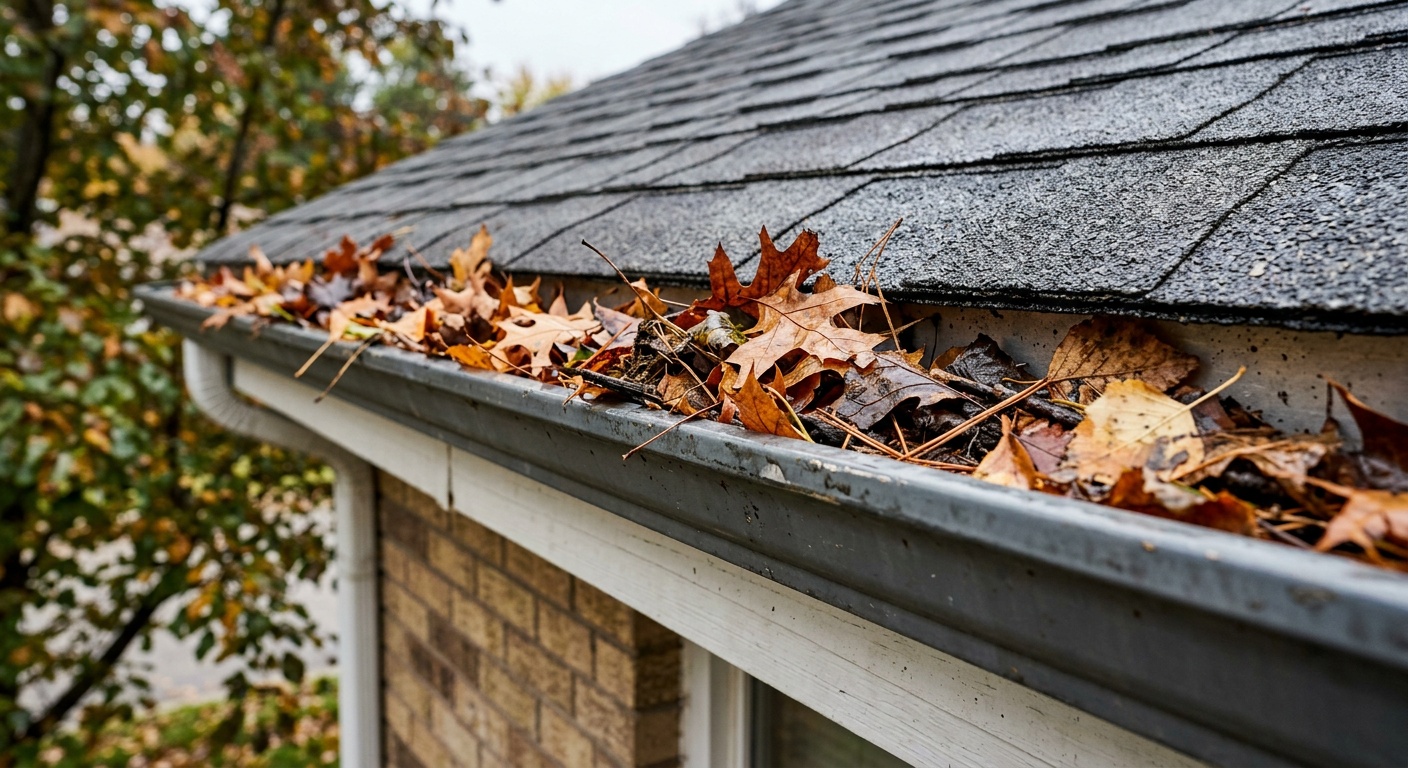
If you only do one gutter cleaning per year, fall is when it should happen. As deciduous trees shed their leaves — typically between late September and mid-November depending on your region — gutters fill faster than at any other time of year. Wet, compacted leaves are heavy, acidic, and create perfect conditions for rot, mold, and pest activity.
The timing of your fall cleaning matters enormously. Clean too early (before trees have fully shed) and you’ll need to do it again. Clean too late and the debris has been sitting wet for weeks, breaking down and potentially causing damage. The sweet spot is typically 2–3 weeks after peak leaf fall in your area.
The Fall Gutter Cleaning Process: Step by Step
- Safety first: Use a stable, extension ladder with standoff stabilizers that rest against the wall rather than the gutter itself. Never lean over to reach — reposition the ladder frequently.
- Dry removal first: Use a gutter scoop or stiff brush to remove dry debris before wetting. Wet debris is heavier and messier to handle.
- Work in sections: Start near downspouts and work outward, scooping debris into a bucket or tarp-lined container below.
- Flush with water: Use a garden hose with a spray nozzle to flush from the far end toward downspouts, checking for flow and identifying blockages.
- Clear downspouts: If water doesn’t flow freely, use a plumber’s snake or downspout flushing tool to clear clogs from the top or bottom.
- Final inspection: Look for any damage or separation that occurred during cleaning. Address repairs before winter sets in.
Many experts recommend a second fall cleaning in regions with heavy tree coverage — one in mid-October and another in late November or early December, after leaves have fully dropped.
Winter: Protecting Gutters from Ice and Snow
Winter is the season where deferred gutter maintenance turns into expensive consequences. Ice dams — arguably the most destructive winter phenomenon for residential roofing — form directly because of inadequate gutter systems and poor attic insulation working together.
An ice dam forms when heat escapes through the roof, melts snow near the ridge, and that snowmelt travels down to the cold eaves where it refreezes. If gutters are full of debris, that ice has nowhere to go — and it backs up under shingles, into your attic, and down your walls. In severe cases, ice dams can cause tens of thousands of dollars in damage.
Winter Gutter Protection Strategies
Heat cables (also called heat tape): Electric resistance cables installed along the gutter and lower roof edge prevent ice from forming. Modern self-regulating heat cables, such as those from EasyHeat or Frost King, adjust their output based on temperature and are far more energy-efficient than older models. They’ve become notably more popular in 2025–2026 as extreme winter events have increased in frequency.
Gutter guards with heated edges: Premium gutter guard systems now integrate low-voltage heating elements directly into the guard surface, providing passive ice prevention without separate cable installation.
Roof rakes: For homes in heavy snow regions, using a long-handled roof rake to remove snow from the lower 3–4 feet of your roof after each major snowfall dramatically reduces ice dam formation. This is one of the most effective and affordable strategies available.
What NOT to do in winter:
- Do not use rock salt in gutters — it accelerates corrosion of aluminum and steel dramatically
- Do not climb onto an icy or snow-covered roof — this is extremely dangerous
- Do not ignore ice dam signs (icicles hanging from gutters, water stains on interior ceilings)
- Do not try to chip ice dams with sharp tools — this damages shingles
Essential Tools and Products for 2026
The gutter maintenance tool market has evolved considerably. In 2026, homeowners have access to more effective, safer, and smarter options than ever before.
Top tools worth investing in:
- Gutter cleaning wand with 270° spray head — connects to a garden hose, allows you to clean from ground level on single-story homes
- Wet/dry shop vacuum with gutter attachment kit — excellent for dry debris removal without climbing
- Gutter scoop (plastic, not metal) — avoids scratching aluminum gutter surfaces
- Telescoping ladder stabilizer — keeps ladder off gutter edges while providing stable positioning
- Micro-mesh gutter guards — the 2026 gold standard for debris prevention, with significantly improved designs that prevent fine debris like pine needles and shingle granules from entering
- Gutter sealant (polyurethane-based) — far more durable than older silicone formulas, remains flexible through temperature extremes
Seasonal Maintenance Comparison Table
| Season | Primary Task | Time Required | Risk Level | Average Cost (DIY) |
|---|---|---|---|---|
| Spring | Inspection, debris clearing, repair | 2–4 hours | Medium | $20–$80 |
| Summer | Post-storm checks, pest control, trimming | 1–2 hours | Low | $0–$30 |
| Fall | Full cleaning (1–2 rounds), downspout clearing | 3–6 hours | High | $30–$100 |
| Winter | Ice dam prevention, snow removal | 1–3 hours | Very High | $50–$200 |
DIY vs. Professional Cleaning: Making the Right Call
This is one of the most common questions homeowners wrestle with — and the honest answer is: it depends on your specific situation. Here’s how to think through it strategically.
DIY makes sense when:
- Your home is single-story or has easily accessible gutters
- You’re comfortable on a ladder and have proper safety equipment
- Your gutter system is in good overall condition
- You have time for 2–3 cleanings per year
Hiring a professional makes sense when:
- Your home is two or more stories — fall risk increases dramatically with height
- You have a complex roofline with multiple valleys and angles
- You’re dealing with significant structural repairs, not just cleaning
- You have mobility limitations or health concerns
- You lack the time or tools for thorough seasonal maintenance
In 2026, professional gutter cleaning typically costs between $120 and $350 for a full clean depending on home size and region, with prices slightly higher in urban markets. Many companies now offer annual service agreements — typically two cleanings per year (spring and fall) — for $200–$450, which can represent good value and peace of mind.
Case Study: A couple in Portland, Oregon, with a 2,400 sq ft two-story craftsman home switched to a professional annual maintenance contract in 2025 after the homeowner slipped on a wet ladder. For $280/year, their gutters are cleaned twice annually, all minor repairs are handled on-site, and they receive a condition report after each visit. They consider it one of their best home maintenance decisions.
3 Common Gutter Challenges and How to Solve Them
Challenge 1: Persistent Clogging Despite Regular Cleaning
If you’re cleaning your gutters twice a year and still experiencing frequent clogs, the issue is likely your surrounding environment — heavy tree coverage, specific tree types (pines, sweetgums, and cottonwoods are notorious debris producers), or nearby construction that generates fine particulate debris.
Solution: Invest in a quality micro-mesh gutter guard system. In 2026, brands like LeafFilter, HomeCraft, and Raptor offer guards that block debris as fine as shingle granules while maintaining full water flow. Expect to pay $15–$30 per linear foot installed. While the upfront cost is significant, most homeowners in high-debris environments recoup the cost within 3–5 years in saved cleaning costs and avoided repairs.
Challenge 2: Gutters Pulling Away from the Fascia
This is extremely common in homes over 15 years old. The original gutter spikes loosen over time due to repeated thermal expansion and contraction, and the weight of debris and water accelerates the process.
Solution: Replace gutter spikes with gutter screws — longer, threaded fasteners that bite deeply into the fascia and rafter tails for a permanent grip. This is a straightforward DIY fix: remove the old spike, drill a pilot hole slightly offset from the original location, and drive a 7-inch hex-head gutter screw with a power drill. Cost is minimal — about $15 for a bag of 25 screws — and the result is dramatically more secure gutter attachment.
Challenge 3: Water Not Draining After Downspout Is Clear
You’ve cleared the downspout, flushed the gutters, but water still pools in certain sections. This is almost always a pitch problem — the gutter has lost its slope toward the downspout and now holds standing water.
Solution: Adjust gutter hanger spacing and height to restore proper slope. The standard rule is a 1/4-inch drop per 10 feet of gutter run. Use a chalk line or long level to identify where the slope is incorrect, then loosen the affected hangers and reposition them at the correct height before re-securing. Standing water in gutters accelerates corrosion, encourages mosquito breeding, and adds structural stress — so this fix is well worth the 30–60 minutes it takes.
Gutter Damage Risk by Season
The following chart represents the relative risk of gutter-related home damage by season, based on insurance claim data and home inspection reports from 2024–2025:
Source: Composite data from home inspection reports and property insurance claim patterns, 2024–2025.
Frequently Asked Questions
How often should I clean my gutters each year?
For most homes with moderate tree coverage, twice per year is the minimum — once in late spring (after seed and pollen season) and once in late fall (after leaves have dropped). Homes surrounded by pine trees or heavy deciduous canopy may need 3–4 cleanings annually. After any major storm event regardless of season, a quick check is strongly recommended. Remember: the cost of one professional cleaning is trivial compared to even minor water damage repairs.
Are gutter guards worth the investment in 2026?
For the majority of homeowners — especially those with two-story homes, significant tree coverage, or difficulty accessing their roofline safely — quality gutter guards represent excellent long-term value. Micro-mesh guards in particular have improved dramatically in design and durability over the past few years. They won’t eliminate maintenance entirely (annual flushing is still recommended), but they reduce cleaning frequency by 70–90% and dramatically lower the risk of major clogs. The key is choosing a reputable brand and having them properly installed — poorly installed guards can actually cause more problems than no guards at all.
What are the signs that my gutters need immediate professional attention?
Several warning signs warrant prompt professional evaluation rather than a DIY approach: visible sagging or sections pulling completely away from the fascia; water stains on interior ceilings or walls adjacent to exterior walls; mold or mildew growth on siding below the gutter line; basement water intrusion following rainfall; large ice formations hanging from gutters in winter; and visible cracks or holes longer than 6 inches. These situations often involve underlying structural issues — rotted fascia boards, damaged roof edges, or compromised gutter hangers — that require more than simple cleaning to resolve correctly.
Your Gutter Maintenance Roadmap: Next Steps
You now have everything you need to approach gutter maintenance with confidence and strategy. Here’s how to turn this knowledge into action, starting today:
- Do a ground-level inspection this week. Walk your home’s perimeter and note any obvious sagging, separation, or overflow staining. You don’t need a ladder for this first step — just an observant eye and a notepad.
- Schedule your next cleaning based on the season. If it’s spring or fall, put a cleaning date on your calendar within the next two weeks. If it’s summer or winter, plan a post-storm check routine and schedule your fall cleaning now before it slips your mind.
- Assess your tree situation. Look at what’s overhanging your roofline and make a summer trimming plan. This single step reduces your annual maintenance burden more than almost anything else.
- Evaluate the gutter guard question honestly. If you’re regularly spending 4+ hours on gutter maintenance per year, or if height access is a safety concern, research micro-mesh gutter guard options and get 2–3 quotes from reputable local installers.
- Create a simple seasonal maintenance log. A basic spreadsheet or even a notes app entry dated each time you clean or inspect your gutters gives you an invaluable history — and helps you spot patterns before they become problems.
As climate patterns continue shifting in 2026 and beyond — with more intense rainfall events, unpredictable winters, and extended storm seasons — the value of a proactive gutter maintenance routine will only grow. Homes with well-maintained drainage systems are demonstrably more resilient, retain higher property values, and generate fewer insurance claims.
Here’s the question worth sitting with: Your home is likely your most significant financial asset — so what’s your gutter system worth in the larger context of protecting everything underneath it? A few hours and a modest investment each year might be the highest-ROI home maintenance decision you make in 2026.