Heather Donnelly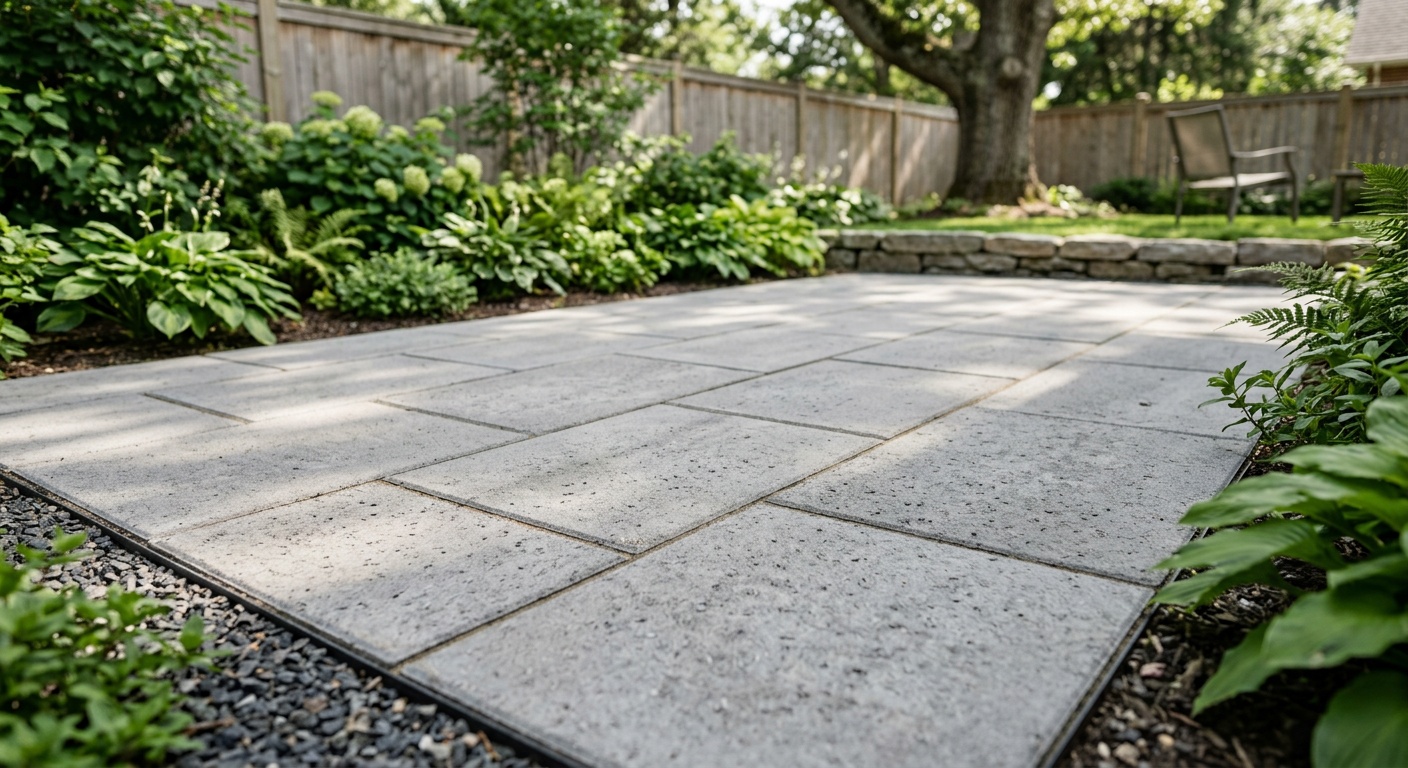
Pavers Over Concrete Patio: The Complete Installation Guide for Homeowners in 2026
Reading time: 14 minutes
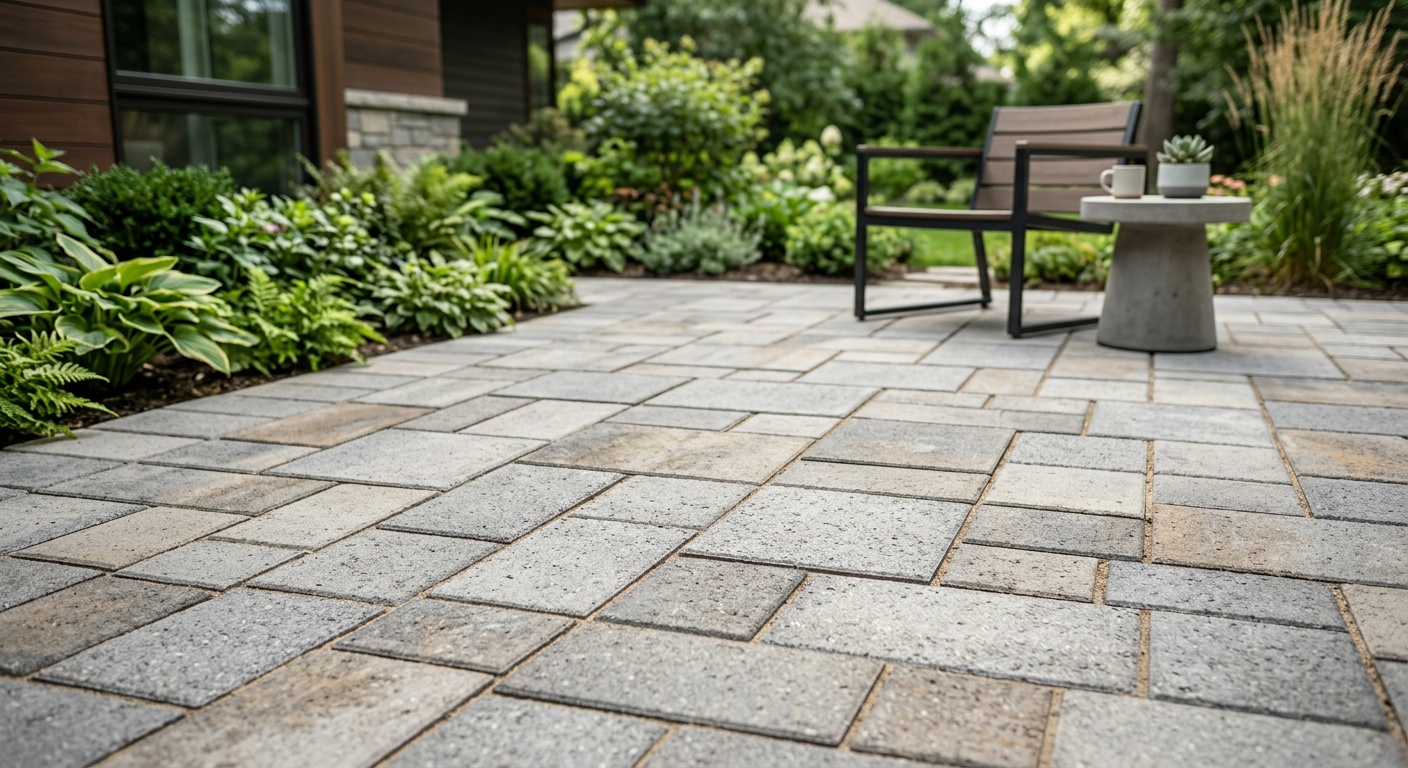
You’ve stared at that cracked, stained concrete patio long enough. Maybe it’s faded to a depressing gray, or maybe it’s developed hairline fractures that collect water every time it rains. Whatever your situation, here’s the good news: you don’t have to demolish it. Installing pavers directly over an existing concrete slab is one of the smartest, most cost-effective patio upgrades a homeowner can make in 2026 — and with the right guidance, it’s a project you can realistically tackle yourself.
This guide cuts through the noise. We’ll walk you through every step of the process, from evaluating your existing slab to choosing the right materials to laying that final paver perfectly level. Whether you’re a weekend DIYer or someone who’s never held a rubber mallet, this is your practical roadmap to a stunning outdoor space.
Table of Contents
- Why Pavers Over Concrete Makes Sense in 2026
- Assessing Your Existing Concrete Slab
- Materials, Tools, and Cost Breakdown
- Step-by-Step Installation Process
- 3 Common Challenges and How to Overcome Them
- Paver Type Performance Comparison
- Material Comparison Table
- Frequently Asked Questions
- Your Patio Transformation: Next Steps
Why Pavers Over Concrete Makes Sense in 2026
Let’s be direct about this: concrete removal is expensive, labor-intensive, and increasingly difficult to justify when overlaying pavers achieves nearly the same aesthetic result at a fraction of the cost and environmental impact. In 2026, with construction material costs having stabilized after the volatility of 2023–2025, homeowners are finding the paver overlay method more attractive than ever.
According to the National Association of Realtors’ 2025 Remodeling Impact Report, outdoor living improvements — including patio upgrades — consistently return between 65% and 80% of their investment upon home sale. Paver patios, specifically, have become one of the top-requested features by homebuyers in the 35–55 age demographic, reflecting a broader shift toward intentional outdoor living spaces.
Here’s what makes the overlay approach genuinely smart:
- No demolition costs: Concrete removal typically runs $3–$6 per square foot in 2026 — that’s $1,500–$3,000 for an average 500 sq ft patio before you’ve spent a dime on new materials.
- Structural base already exists: Your concrete slab acts as a near-perfect sub-base, eliminating the need for extensive gravel compaction layers.
- Reduced project timeline: An overlay project can be completed in a single weekend versus 5–7 days for a full demolition-and-rebuild.
- Lower environmental footprint: Avoiding concrete disposal keeps hundreds of pounds of material out of landfills.
“Overlay installations have become the go-to recommendation for existing slabs in good structural condition. The substrate stability you get from existing concrete is genuinely superior to compacted gravel for most residential applications.” — David Parrish, Certified Landscape Contractor, ICPI Member, 2025
Assessing Your Existing Concrete Slab
Here’s where most homeowners skip ahead too quickly — and pay for it later. Before you order a single paver, your concrete slab needs a honest evaluation. Not every slab is a suitable candidate for overlay, and recognizing the difference now saves you from a failed project six months down the road.
The Three-Part Slab Assessment
1. Structural Integrity Check
Walk your entire slab and look for the following warning signs. Minor surface cracking (hairline cracks under ¼ inch wide) is perfectly acceptable — these can be filled before installation. What you’re watching for is structural failure: sections that flex underfoot, large heaved sections caused by tree roots or frost, or areas where chunks of concrete have spalled and separated. If more than 20% of your slab shows active movement or severe cracking, an overlay may not be your best option.
Quick test: Press firmly on different sections of the slab with your foot. Any flex or bounce indicates the sub-base beneath the concrete has failed — a red flag that demands attention before proceeding.
2. Drainage and Slope Evaluation
Your existing slab should slope away from your home’s foundation at a minimum of ¼ inch per foot — ideally ⅜ inch per foot. Pavers installed over a flat or reverse-sloping slab will trap water, leading to efflorescence, freeze-thaw damage in northern climates, and potential foundation moisture issues. Use a 4-foot level and measure the drop across several areas of the slab.
3. Height Clearance Assessment
This is the step that catches people off guard. Adding pavers over concrete raises your patio surface by 1.5 to 2.5 inches depending on your paver thickness and bedding method. Check clearances at:
- Door thresholds (your sliding or French door must still open freely)
- Steps (the rise on the first step will decrease, potentially becoming a trip hazard)
- Any drainage grates or utility access points
A rise of 1.5 inches at a door threshold is typically manageable. Anything more than 2 inches usually requires modifying the threshold or adjusting step heights to meet building code requirements in most municipalities.
Real-World Example: The Martinez Backyard Project
In the spring of 2025, homeowner Elena Martinez in Phoenix, Arizona, planned to overlay her 380 sq ft concrete patio with travertine pavers. During assessment, she discovered a 3-inch section near the east edge had heaved due to an old tree root — a problem she nearly missed because it was covered in outdoor furniture. She addressed it by having the heaved section ground down flush (cost: $180) and the adjacent crack filled with polyurethane caulk before proceeding. Her total project came in at $2,400 in materials and was completed over two weekends. The result transformed an eyesore into the centerpiece of her backyard. The lesson? Assessment isn’t optional — it’s what separates a successful project from an expensive mistake.
Materials, Tools, and Cost Breakdown
Smart material selection in 2026 means balancing aesthetics, durability, and budget in a market that’s seen some meaningful shifts. Porcelain pavers, once considered premium-only, have become more competitively priced due to expanded domestic production, while traditional concrete pavers remain the workhorse of the industry.
Paver Materials: Your Main Options
Concrete Pavers
The reliable standard. Concrete pavers run $2.50–$5.00 per square foot in 2026 for standard residential grades. They’re widely available, easy to cut, and come in an enormous variety of shapes and colors. For overlay applications, use a minimum 2.375-inch thickness for structural confidence.
Porcelain Pavers
The growing favorite for modern aesthetics. At $5.00–$12.00 per square foot, they’re pricier but offer exceptional stain resistance, minimal maintenance, and a refined appearance that mimics natural stone. Their low porosity makes them ideal for wet climates. They require a diamond blade for cutting and slightly more careful installation.
Natural Stone (Travertine, Bluestone, Slate)
The premium option at $8.00–$20.00 per square foot. Natural stone creates genuinely beautiful results but demands more precise installation. Travertine is particularly popular in warm-climate markets like Florida and the Southwest. Some natural stones require sealing annually to maintain their appearance.
Clay Brick Pavers
A classic choice at $4.00–$8.00 per square foot. Extremely durable — clay pavers can last 50+ years — and their color runs throughout the material rather than being a surface coating. Slightly more limited in modern design options compared to concrete or porcelain.
Tools You’ll Need
- Pressure washer (or rental, ~$60/day)
- 4-foot level and 6-foot straightedge
- Rubber mallet
- Plate compactor (rental ~$80–$120/day — essential for larger projects)
- Wet saw with diamond blade OR angle grinder with diamond disc
- Chalk line and tape measure
- Broom (for polymeric sand installation)
- Safety glasses and knee pads
- Notched trowel (for mortar-set or adhesive applications)
- Torpedo level for individual paver checks
Step-by-Step Installation Process
There are two primary methods for installing pavers over concrete: the dry-set method (using a thin layer of bedding sand or specialized overlay fabric) and the mortar-set method (bonding pavers directly to the slab with mortar or adhesive). Each has distinct advantages depending on your situation.
Method 1: Dry-Set with Bedding Layer (Recommended for Most DIYers)
This is the preferred approach for most residential overlay projects. It’s more forgiving of minor surface imperfections and allows for individual paver adjustment without committing to a permanent bond.
Step 1: Prepare the Slab Surface
Thoroughly pressure wash the entire slab at 2,500–3,000 PSI. Remove all dirt, mold, grease, and debris. Allow 24–48 hours of drying time. Fill any cracks wider than ¼ inch with polyurethane concrete crack filler; allow to cure per manufacturer instructions (typically 24 hours). Grind down any high spots greater than ¼ inch.
Step 2: Apply Geotextile Fabric (Optional but Recommended)
Roll out a layer of commercial geotextile separation fabric over the cleaned slab. This prevents fine sand particles from migrating into concrete surface irregularities and helps maintain consistent bedding depth. Overlap seams by 6 inches.
Step 3: Establish Your Layout and Reference Lines
Snap chalk lines to define your installation area. Start from the most visible point — typically the area visible from your primary door or main sightline. Plan your pattern and calculate your starting point to minimize awkward cuts at visible edges. For a running bond pattern, offset joints by 50%; for a herringbone, establish your 45° angle from a center line.
Step 4: Spread Bedding Sand
Use coarse concrete sand (not play sand or fine masonry sand). Spread to a consistent depth of ¾ to 1 inch using screed rails as guides. Screed the sand perfectly flat with a 2×4 board pulled across the rails. Do not walk on screeded areas — even a footprint will compromise your level surface.
Step 5: Lay Pavers
Begin at your established reference corner and work outward. Place each paver directly down onto the sand without sliding — sliding displaces the bedding. Maintain consistent joint spacing (typically ⅛ to ⅜ inch) using spacers or eye-balling for experienced installers. Check level frequently: every 10–15 pavers, lay your 4-foot straightedge across the surface and verify no lips or dips exceed ⅛ inch.
Step 6: Cut Edge Pavers
Use a wet saw or angle grinder for cuts. Measure twice, mark with a pencil or chalk, and cut carefully. For curved edges, use an angle grinder for gradual curved cuts. Always wear eye protection and a dust mask when cutting.
Step 7: Compact the Surface
Run a plate compactor over the entire installed surface. Use a rubber pad attachment or a sheet of plywood to protect paver surfaces from direct contact. Two passes in perpendicular directions is standard. This firms the sand bedding and fully seats each paver.
Step 8: Apply Polymeric Sand
Sweep polymeric sand across the entire surface, working it into all joints until full. Use a leaf blower on low to remove excess sand from paver faces. Lightly mist the entire surface with water per manufacturer instructions (typically two passes, 30 minutes apart) to activate the polymer binders. Allow 24–48 hours of cure time before foot traffic, 72 hours before furniture replacement.
Method 2: Mortar-Set (For Porcelain and Natural Stone)
Mortar-set installation is recommended when using thin pavers (under 1.5 inches), porcelain pavers, or natural stone that requires a rigid, permanent bond. Apply a layer of polymer-modified thinset mortar (¼ to ½ inch) directly to the concrete using a notched trowel, then back-butter each paver before pressing firmly into position. This method requires more skill but produces an exceptionally stable result. Joint spacing is filled with unsanded or sanded tile grout rather than polymeric sand.
3 Common Challenges and How to Overcome Them
Challenge 1: Managing Height Transitions at Doorways
This is the single most common problem that derails overlay projects. When your finished paver surface sits too high relative to your door threshold, you either have a trip hazard or a door that won’t fully open. Solution: Before installation, use a straightedge and level to project your finished surface height to every threshold. If you’re within ½ inch of a problem, consult a threshold ramp (available in aluminum or rubber) that transitions smoothly from door to patio. For larger discrepancies, consider using a thinner paver profile — many porcelain pavers are available in ¾-inch thickness — combined with a thinner bedding layer using tile adhesive rather than a full sand bed.
Challenge 2: Water Pooling After Installation
Nothing is more frustrating than completing a beautiful installation only to watch water pool in one corner after the first rain. Solution: Prevention is everything here. During your initial slab assessment, mark low spots with spray paint. During sand bedding, build in the correct slope toward drainage areas — remember that ¼ inch per foot minimum grade away from the foundation. If your slab has an inherent low spot that can’t be corrected with bedding sand alone (adding too much sand creates an unstable thick bed), consider having that section professionally ground or filled with a hydraulic cement leveling compound before you begin.
Challenge 3: Paver Displacement at Edges
Without containment, pavers at the perimeter of your installation will gradually shift outward over time under foot traffic. This is especially true for dry-set installations. Solution: Always install edge restraints before or immediately after laying pavers. Plastic spike-in edge restraints are the standard solution — they’re inexpensive ($0.50–$1.00 per linear foot), effective, and largely invisible once installed. For a more refined look, consider a soldier course of pavers set in mortar around the perimeter, or a metal edge restraint in aluminum or steel for contemporary designs. Never skip edge restraints — it’s the shortcut that guarantees callbacks.
Paver Type Performance Comparison
Here’s how the four main paver types compare across key performance metrics that matter most for overlay applications:
Paver Performance Scores (out of 100)
Material Comparison Table
| Paver Type | 2026 Price (per sq ft) | Lifespan | Maintenance Level | Best Climate |
|---|---|---|---|---|
| Concrete Pavers | $2.50–$5.00 | 25–30 years | Low–Moderate | All climates |
| Porcelain Pavers | $5.00–$12.00 | 30–40 years | Very Low | Humid & coastal |
| Natural Stone | $8.00–$20.00 | 50+ years | Moderate–High | Warm/dry climates |
| Clay Brick | $4.00–$8.00 | 50+ years | Low | All climates |
| Composite Pavers | $3.50–$7.00 | 20–25 years | Low | Temperate zones |
Frequently Asked Questions
Can I install pavers over a cracked concrete slab, or do I need to repair it first?
You can install pavers over a slab with minor hairline cracks — those under ¼ inch wide — without repair, particularly in a dry-set application where the sand bedding absorbs minor movement. However, cracks wider than ¼ inch should be filled with polyurethane crack filler before installation to prevent sand migration into the crack over time. More importantly, if a crack is the symptom of a moving slab section, the underlying cause must be addressed first. A paver overlay will not stabilize a structurally compromised slab — it will simply transfer the movement to your new surface, causing pavers to crack, tip, or separate. When in doubt, have a structural assessment done before proceeding.
Do I need a building permit to install pavers over my existing concrete patio?
In most U.S. municipalities as of 2026, installing pavers over an existing concrete patio is considered a surface improvement and does not require a building permit, provided you are not changing the footprint of the patio, adding structural elements like pergola footings, or altering drainage patterns in a way that directs water onto neighboring properties. However, permit requirements vary significantly by location. Some jurisdictions — particularly in California, Colorado, and parts of the Pacific Northwest — have added impervious surface regulations that may apply. Always check with your local building department before beginning work. A quick phone call or online check takes 10 minutes and could save you from a costly compliance issue later.
How do I handle the joints between pavers — is polymeric sand always the right choice?
Polymeric sand is the right choice for the vast majority of dry-set residential installations. It’s a sand-polymer blend that hardens when activated with water, inhibiting weed growth, resisting ant excavation, and preventing sand washout during heavy rain. For 2026 installations, look for next-generation polymeric sand products with improved UV-resistance and anti-efflorescence formulations — brands like Alliance Gator Maxx G2 and Techniseal HP+ represent the current quality standard. The exception: mortar-set porcelain or natural stone installations should use tile grout in the appropriate sanded or unsanded formulation based on joint width. Using polymeric sand on a mortar-set installation won’t provide adequate bond and will quickly deteriorate. Match your jointing material to your installation method every time.
Your Patio Transformation: Next Steps
Here’s the honest truth about this project: the homeowners who get the best results aren’t necessarily the most skilled — they’re the most prepared. Every step of the process rewards forethought, and the investment you make in planning pays dividends in a finished surface that looks professional and lasts decades.
Here’s your practical action roadmap to move forward with confidence:
- This week — Assess your slab: Spend 30 minutes walking your slab with a level, a tape measure, and honest eyes. Document problem areas with photos. Determine your door threshold clearances and mark any cracks or heaved sections.
- Within two weeks — Choose your material and calculate quantities: Select your paver type based on budget, climate, and aesthetic preference. Measure your patio area, add 10% for cuts and waste, and request quotes from at least three local suppliers.
- Before you order — Confirm permit requirements: A single call to your local building department takes minutes and ensures you’re operating with full legal clarity.
- Week of installation — Gather tools and prep the surface: Rent equipment (plate compactor, wet saw) a day in advance. Pressure wash and dry your slab completely. Fill cracks and allow cure time.
- Post-installation — Protect your investment: Apply a penetrating sealer to concrete or natural stone pavers within 30 days of installation. Plan for a polymeric sand refresh every 4–5 years as part of normal maintenance.
The broader context here matters too: in 2026, outdoor living spaces have moved from nice-to-have to essential-to-value in the residential real estate market. As remote and hybrid work patterns continue reshaping how people use their homes, a well-designed patio isn’t just aesthetically pleasing — it’s a genuine extension of your living space and a meaningful component of your home’s market value.
So here’s the question worth sitting with: What would your outdoor space look like if you stopped accepting “good enough” from a cracked, tired concrete slab — and started building the patio that actually reflects how you want to live? The materials are available, the process is learnable, and the result is well within reach. Your transformation starts with that first honest assessment.